The Evolving Techniques Used by Intimacy Coordinators to Ensure Performer Safety During Intense Scenes in Contemporary Dramas
Ellis Zimmermann · Oct 2, 2026

The Evolving Techniques Used by Intimacy Coordinators to Ensure Performer Safety During Intense Scenes in Contemporary Dramas
Intimacy coordinators work with directors, actors, and crew members to choreograph scenes involving physical contact, nudity, or simulated sexual activity in contemporary dramas, and their methods have shifted since the mid-2010s to incorporate structured communication frameworks and protective barriers. These professionals map out movements in advance through rehearsals that separate emotional preparation from physical execution, and they maintain closed sets where only essential personnel remain present during filming.
Core Protocols in Modern Practice
Data from industry reports shows that coordinators now require written consent documents that outline specific actions, camera angles, and touch boundaries before any rehearsal begins, while performers retain the right to modify or pause sequences at any point. Teams often use silicone barriers, modesty garments, and prosthetic overlays to reduce direct skin contact, and these tools have become standard on sets for streaming series and theatrical releases alike. Observers note that coordinators schedule separate sessions for actors to discuss emotional states apart from the physical blocking, and they integrate these discussions into daily call sheets to track performer comfort levels across multiple shooting days.
Research indicates that closed-set policies, once informal, now follow checklists distributed by production companies that limit the number of observers and require advance notification of all participants. In October 2026 several major studios updated their guidelines to mandate digital logging of every consent adjustment made during production, which allows coordinators to review changes across different takes and locations.
Advances in Rehearsal and Technology Integration
Coordinators have adopted virtual reality headsets to let performers preview scene geometry without physical contact, and this approach lets teams adjust camera placements before anyone steps onto the set. Studies conducted by film training programs found that VR walkthroughs reduced the number of on-set revisions by nearly 30 percent in drama productions filmed between 2023 and 2025. Performers also receive access to motion-capture suits that record intended movements, which coordinators then translate into precise blocking notes shared with camera operators and lighting technicians.
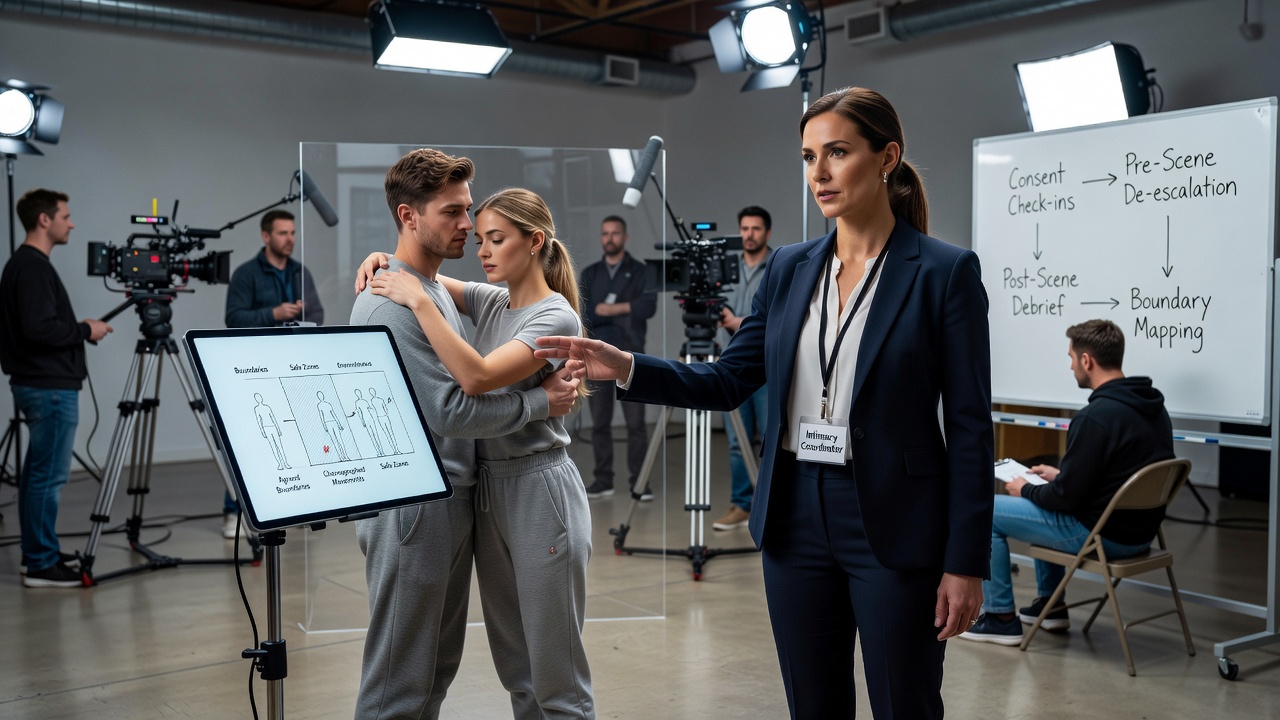
According to SAG-AFTRA resources, coordinators now collaborate with dialect coaches adn movement specialists in combined sessions that address both verbal cues and physical positioning, and these joint meetings occur at least 48 hours before principal photography on intimate sequences. European productions have introduced similar requirements through the European Film Academy's safety framework, which emphasizes cross-department coordination to prevent last-minute changes that could compromise agreed boundaries.
Training Standards and Industry Adoption
Certification programs run by recognized unions require candidates to complete coursework in consent law, anatomy, and conflict resolution before they receive on-set assignments. Figures from 2025 show that more than 70 percent of union productions in North America and Australia listed a certified intimacy coordinator in their credits, and this percentage continues to rise as streaming platforms add contractual clauses that tie funding releases to verified safety staffing. One study released by a Canadian film research group revealed that productions employing trained coordinators reported fewer formal complaints related to physical contact scenes compared with earlier periods when such roles did not exist.
Coordinators also maintain ongoing communication with set medics and mental health professionals who remain available throughout the shoot, and they schedule debrief sessions at the end of each filming day to address any residual concerns before the next call time. These practices have expanded to include follow-up check-ins weeks after principal photography wraps, especially for extended series that revisit the same storylines across multiple seasons.
Conclusion
The techniques employed by intimacy coordinators continue to develop alongside changes in production technology and regulatory expectations, with data collection methods and virtual planning tools forming the latest additions to established consent and barrier protocols. Productions in October 2026 operate under updated checklists that document every adjustment in real time, while training requirements and cross-department collaboration remain central to maintaining performer safety during intense scenes in contemporary dramas.