Inside Specialized Facilities Crafting Custom Instruments for Science Fiction Soundtracks
Yves Long · Nov 13, 2026
Inside Specialized Facilities Crafting Custom Instruments for Science Fiction Soundtracks
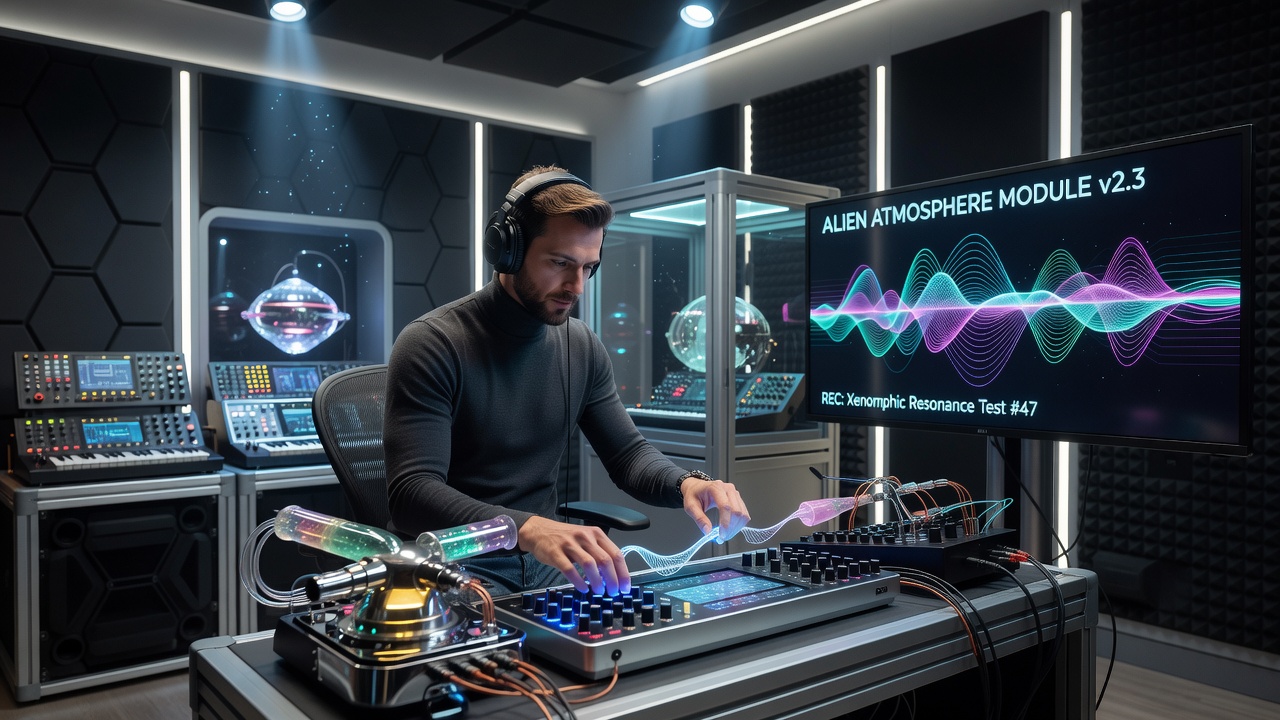
Specialized facilities around the world house teams of composers and instrument builders who design and record unique sound sources for science fiction films, and these spaces combine elements of traditional recording studios with acoustic laboratories that support the creation of otherworldly atmospheres. Builders start with raw materials including titanium alloys, fused silica, and tensioned membranes made from synthetic polymers, then shape them into forms that produce frequencies outside standard musical scales when struck, bowed, or resonated through electromagnetic drivers.
Instrument Design and Material Selection
Design processes begin with acoustic modeling software that predicts how different shapes and material combinations will interact with air and surfaces inside controlled chambers, while engineers test prototypes in environments that minimize external noise interference. One facility in North America maintains an archive of over 200 custom instruments, each documented with frequency response charts and construction schematics that allow replication or variation for new projects. Researchers at institutions such as the National Research Council Canada have contributed data on vibration damping that informs choices for resonant elements meant to evoke distant planetary environments.
Composers collaborate with fabricators to iterate on designs, adjusting tension rods or adding secondary resonators that introduce microtonal shifts and harmonic clusters, and these adjustments occur in iterative sessions where recordings are compared against reference tracks from previous productions. The resulting sounds often layer multiple takes processed through convolution reverb that simulates cavernous or vacuum-like spaces, creating depth without relying solely on digital synthesis.
Recording Techniques in Controlled Environments
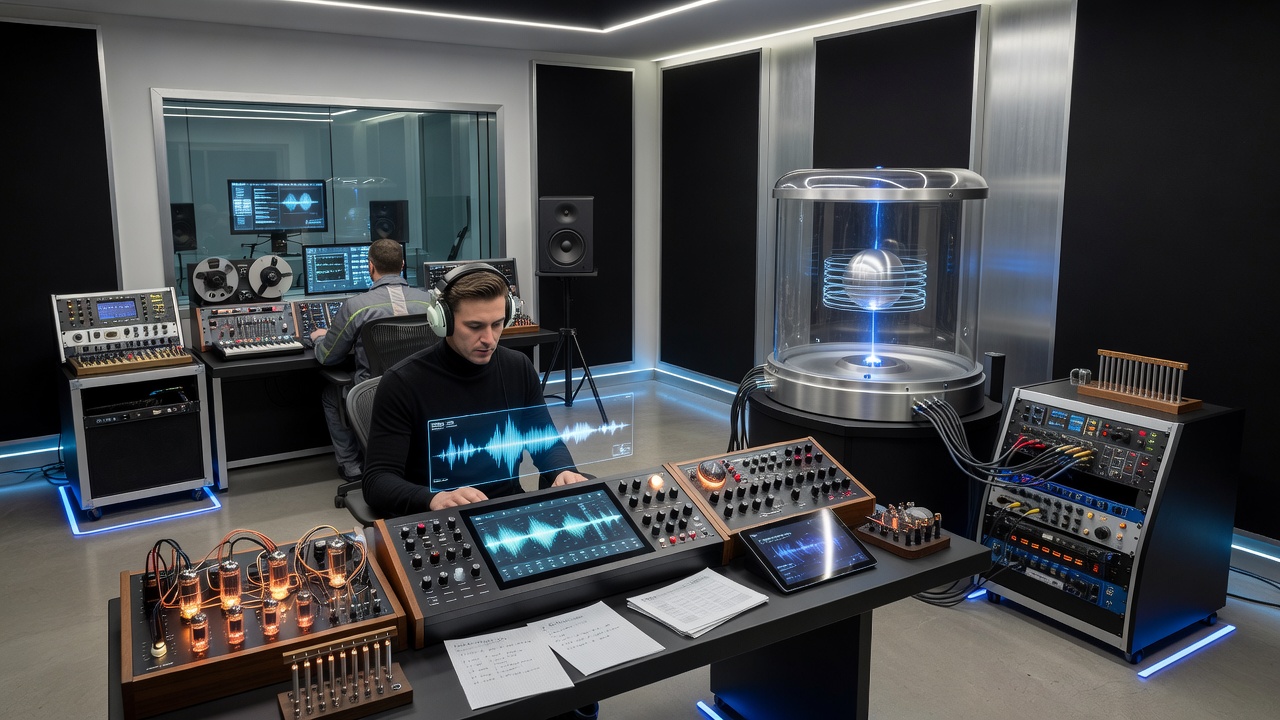
Recording sessions take place in rooms lined with adjustable panels that alter reverberation times from under 0.2 seconds to several seconds, allowing precise control over decay characteristics that help place sounds in imagined alien settings. Microphones positioned at varying distances and angles capture both direct tones and subtle air movements, while contact sensors on instrument bodies record internal vibrations that add textural layers when mixed later. Sessions scheduled for November 2026 will incorporate new sensor arrays developed through partnerships between European acoustics labs and film production companies, expanding the range of low-frequency content available for atmospheric beds.
Data from these recordings feeds into digital libraries used by sound editors, and facilities maintain strict versioning protocols so that original source files remain available for remixing across different projects. Teams document each instrument's performance under temperature and humidity variations because even small environmental changes can shift pitch and timbre enough to affect continuity in final mixes.
Integration with Post-Production Pipelines
Sound designers integrate these recordings into broader tracks by aligning them with synthesized elements and location recordings, creating hybrid cues that maintain organic irregularities while meeting narrative requirements for tension or wonder. Facilities often share standardized metadata formats with post-production houses so that timing references and frequency annotations transfer without loss, and this interoperability supports simultaneous work on multiple films scheduled for release in the same cycle. Observers note that productions released after 2024 increasingly credit these specialized facilities in end titles, reflecting greater recognition of their role in audience immersion.
Training programs at several sites teach composers basic fabrication skills alongside advanced recording methods, ensuring that creative decisions account for physical constraints of materials and spaces. Graduates from these programs have contributed to scores that rely on extended techniques such as bowing across irregular surfaces or exciting membranes with modulated airflow, techniques that produce evolving textures difficult to replicate through software alone.
Future Developments and Industry Collaboration
Industry reports indicate rising demand for custom instruments as visual effects pipelines advance and require matching sonic innovation, and facilities respond by expanding their material testing capabilities. Partnerships with universities in Australia and the European Union have produced studies on psychoacoustic responses to non-harmonic intervals, guiding composers toward frequency combinations that enhance feelings of unfamiliarity without causing listener fatigue. These collaborations also explore sustainable material alternatives that maintain acoustic performance while reducing environmental impact from repeated instrument construction.
Equipment upgrades planned through 2027 include higher-resolution capture systems and automated positioning rigs that allow consistent microphone placement across sessions, reducing variability when recreating specific timbres for franchise sequels. Facilities continue to archive raw recordings in multiple formats to accommodate evolving playback standards in theaters and home viewing environments.
Conclusion
Specialized facilities maintain their position at the intersection of craftsmanship and technology by continually refining both instrument construction and recording methodologies, and their outputs form foundational elements in science fiction soundtracks that define alien atmospheres for global audiences. Ongoing research and cross-industry partnerships ensure these spaces adapt to new production demands while preserving detailed documentation of techniques developed over decades of experimentation.