How Makeup Artists and Lighting Technicians Coordinate Aging Effects Across Decades in Biographical Series Adaptations
Yves Long · Oct 30, 2026
How Makeup Artists and Lighting Technicians Coordinate Aging Effects Across Decades in Biographical Series Adaptations
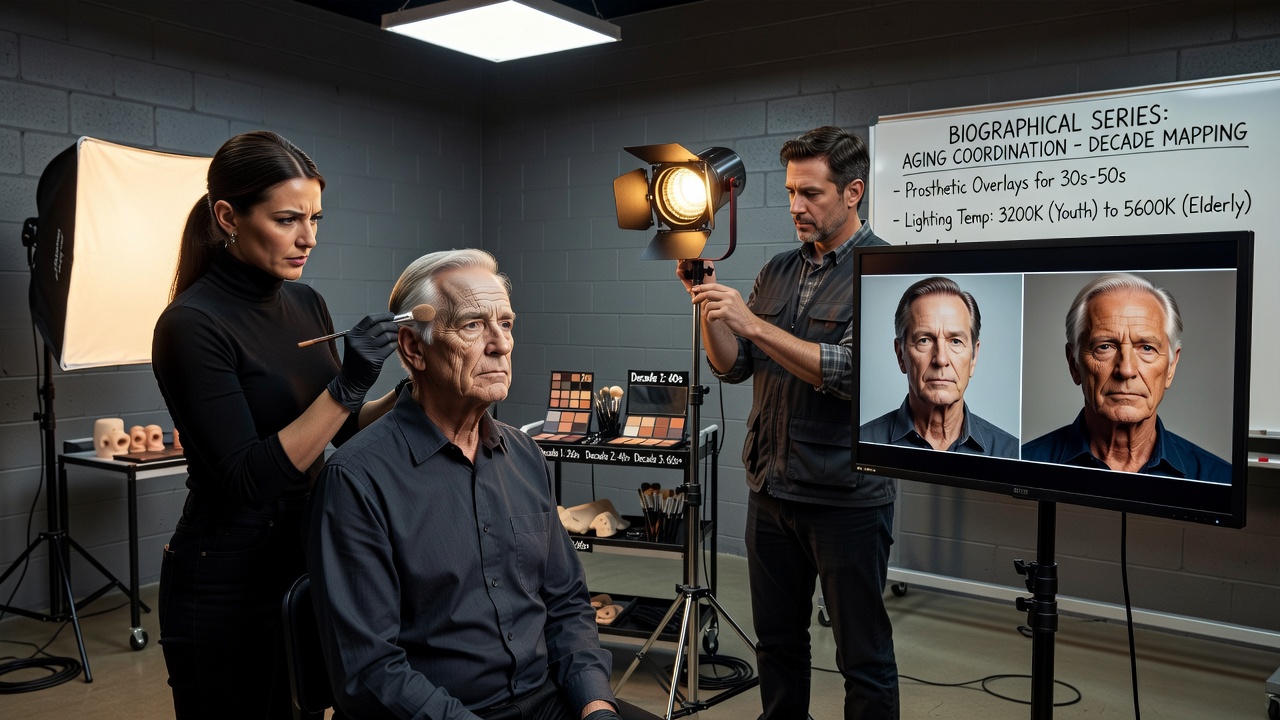
Makeup artists and lighting technicians work together in biographical series to create consistent aging effects that span multiple decades of a subject's life, and this coordination relies on layered prosthetics, targeted illumination, and iterative testing sessions that align skin textures with environmental cues. Production teams begin by reviewing reference photographs and medical records to map specific changes in facial structure, hair density, and pigmentation that occur over time, while technicians adjust light temperatures to enhance or soften those details without revealing seams in the makeup applications.
Core Techniques in Makeup Application
Makeup departments build aging effects through successive layers of silicone appliances and pigment washes that replicate wrinkles, sagging skin, and age spots, and they test these elements under multiple lighting conditions before committing to full shoots. Artists apply base foundations first, then add fine lines with stippling tools, and they follow with translucent powders that interact differently under key lights versus fill lights. This method allows characters to progress from youthful appearances in early episodes to advanced age in later ones, and the process often requires multiple fittings per actor to account for weight fluctuations and skin reactions over extended filming schedules.
Lighting Design and Its Integration Role
Lighting technicians select gel filters and LED panel intensities that complement the makeup layers, and they position practical sources such as table lamps or window gels to cast shadows that emphasize deepened furrows or hollowed cheeks. Data from the University of Southern California School of Cinematic Arts indicates that color temperature shifts of 200-300 Kelvin can alter perceived skin age by up to 15 years when paired with correctly pigmented appliances. Technicians run daily rehearsals where they fine-tune dimmer levels and diffusion materials, ensuring that close-up shots maintain continuity across scenes set in different eras without requiring extensive digital corrections in post-production.
Workflow During Series Production
Teams establish daily communication protocols that include morning briefings between department heads, and they review dailies together to identify discrepancies in how aging reads on camera. Makeup artists document exact product mixes and appliance thicknesses for each age bracket, while lighting crews log fixture placements and intensity ratios so recreations remain identical on subsequent shooting days. In October 2026 several biographical series enter principal photography with these synchronized schedules already in place, allowing crews to move between flashback sequences and present-day scenes without resetting entire lighting grids each time.
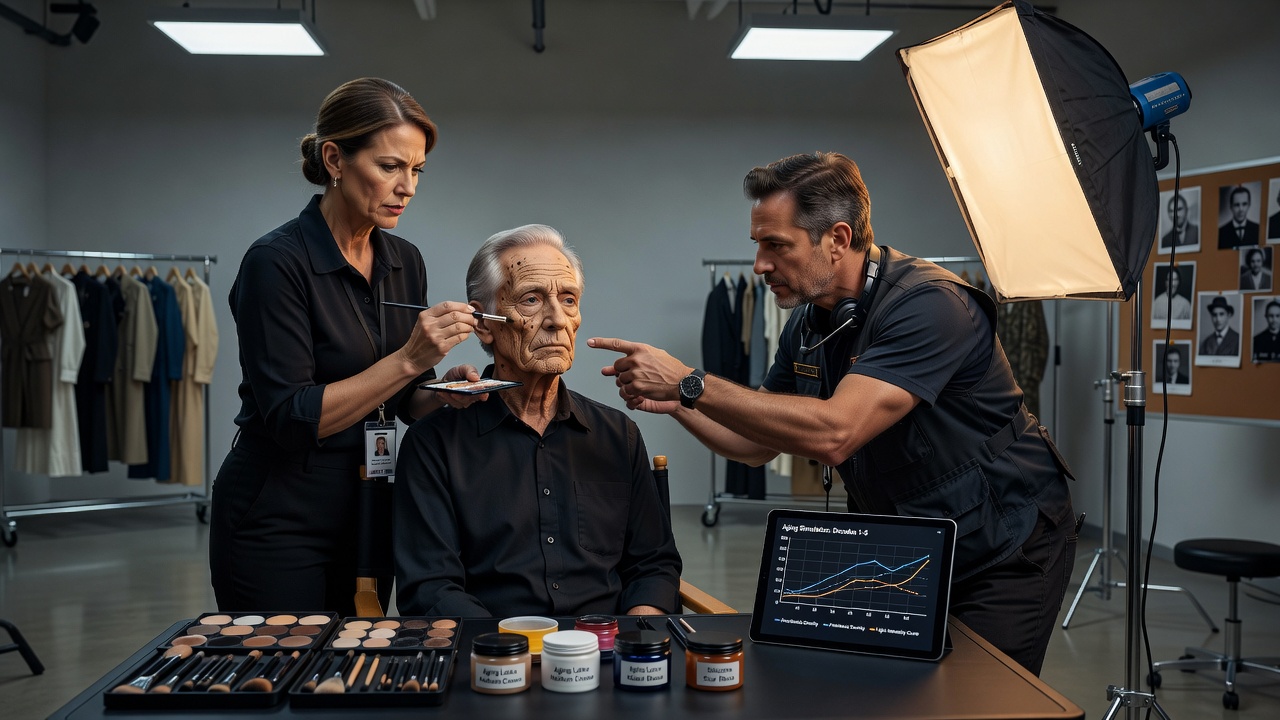
Researchers at the National Film Board of Canada have documented similar coordination methods in long-form productions, noting that pre-planned lighting plots reduce reshoots by an average of 22 percent when aging transitions occur frequently. Crews also incorporate subtle hair and wardrobe adjustments that support the visual progression, and they verify all elements together during camera tests to prevent one department's changes from undermining another's work.
Challenges Across Extended Timelines
Biographical series often film out of chronological order, which forces teams to maintain multiple versions of each actor's appearance simultaneously, and storage of delicate prosthetics plus precise recreation of lighting setups demands detailed tracking systems. Environmental factors such as humidity on location shoots can alter silicone adhesion or change how light scatters across treated skin, prompting on-site adjustments that both departments approve before cameras roll. Observers note that successful productions keep detailed digital libraries of reference images and lighting diagrams so any team member can replicate an effect even when key personnel rotate between episodes.
Conclusion
Coordination between makeup artists and lighting technicians produces believable aging across decades in biographical series by combining material science with precise illumination control, and ongoing documentation practices ensure visual consistency even when filming schedules span months or years. These methods continue to evolve with new materials and equipment, yet the core requirement remains clear communication and repeated verification under actual shooting conditions.