Collaborative Workflows Between Storyboard Artists and Virtual Reality Programmers in Immersive Horror Pre-Production
Ellis Zimmermann · Oct 16, 2026
Collaborative Workflows Between Storyboard Artists and Virtual Reality Programmers in Immersive Horror Pre-Production
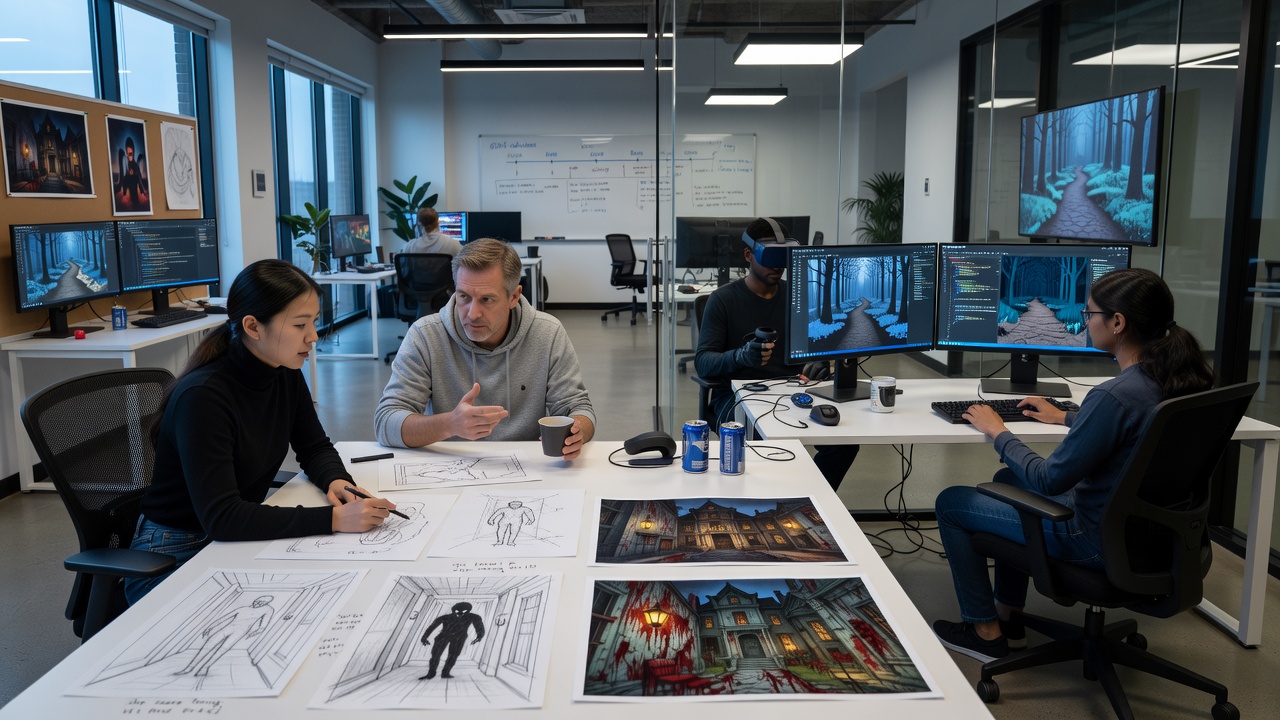
Storyboard artists and virtual reality programmers coordinate closely during pre-production for immersive horror experiences, and this partnership shapes how narrative elements translate into interactive environments. Artists create sequential visuals that outline key scenes while programmers establish the technical frameworks that support user movement and interaction within those scenes. Research from the SIGGRAPH organization shows these teams often begin with shared digital workspaces where initial sketches receive direct annotations from programming leads.
Initial Planning and Visual Mapping
Teams start by defining the horror experience's core triggers such as spatial disorientation and unexpected entity encounters, then storyboard artists produce detailed panels that capture camera angles and timing. Programmers review these panels to identify requirements for real-time rendering and physics simulations. Data from university studies at the University of Melbourne indicates that early alignment on these elements reduces later revisions by up to thirty percent in VR projects. Artists adjust compositions to account for head-tracking capabilities while programmers test basic navigation prototypes against the sketched sequences.
Communication flows through iterative review sessions where both groups overlay technical notes on the same files. Storyboard revisions incorporate feedback about polygon counts and lighting calculations, and this back-and-forth continues until the visual plan matches feasible code structures. In October 2026 multiple development studios reported using cloud-based platforms that allow simultaneous edits from artists in one time zone and programmers in another.
Technical Integration and Prototyping
Once core storyboards receive approval, programmers build initial VR environments that mirror the sketched layouts, and artists then refine details such as shadow placement to enhance tension. Programmers implement branching pathways based on storyboard branching points, which allows users to explore different horror sequences. Observers note that tools like Unity and Unreal Engine serve as common platforms where both disciplines import and adjust assets without file conversion delays.
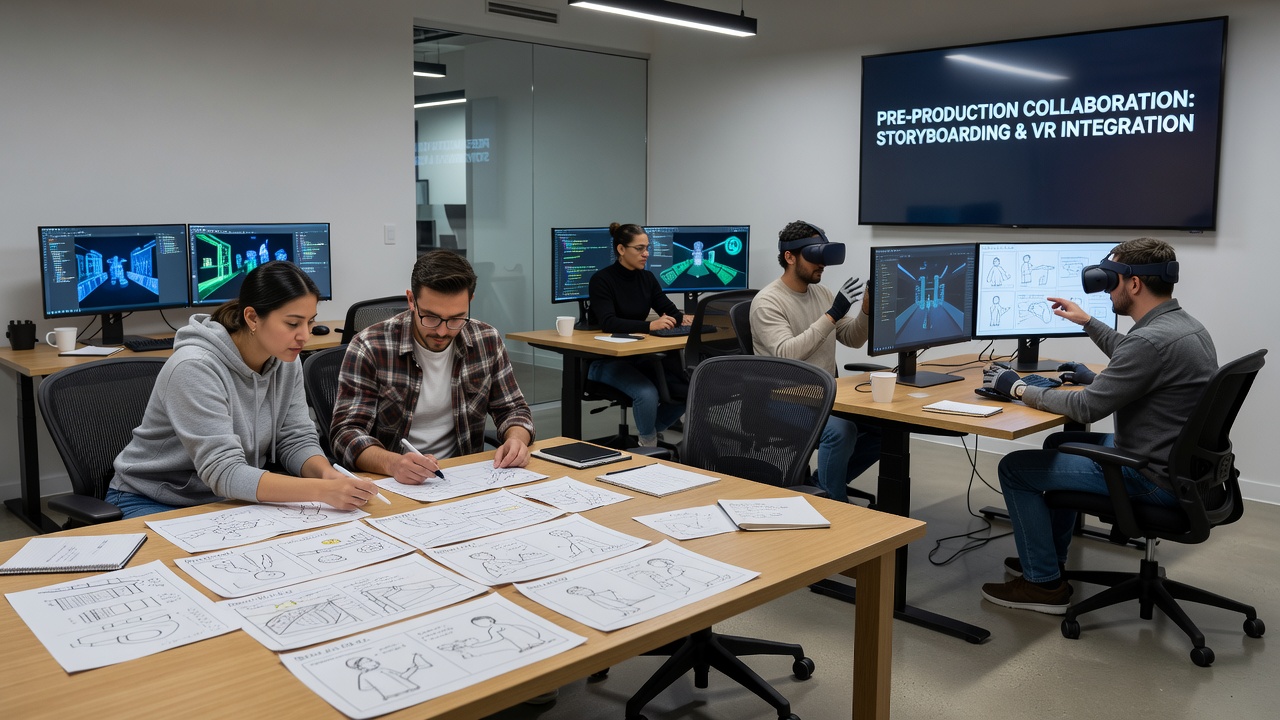
Testing cycles incorporate motion capture data to verify how user movements align with storyboard action beats. Artists receive real-time playback links so they can suggest adjustments to entity reveal timing or environmental hazards. Figures from the European Audiovisual Observatory reveal that collaborative pre-production phases for VR horror titles average twelve weeks when teams maintain daily sync meetings rather than weekly ones.
Addressing Spatial and Narrative Challenges
Immersive horror relies on precise control of viewer attention, and storyboard artists map sight lines while programmers code occlusion systems that support those maps. When a sketched corridor leads to a sudden scare, the code must trigger events without breaking immersion through loading pauses. Teams use reference videos from physical walkthroughs to calibrate both the drawn perspectives and the virtual camera behaviors.
One project documented by researchers at the University of British Columbia demonstrated how early integration of audio cues into storyboards helped programmers allocate resources for spatial sound engines. Adjustments to jump scare distances occurred after both groups reviewed combined test builds, and this process kept the experience consistent across different headset models.
Current Practices in 2026
By October 2026 industry reports indicate wider adoption of AI-assisted tools that flag potential collision issues between storyboard elements and programmed geometry. These systems allow artists to visualize how a sketched monster model will scale within the coded space before final assets arrive. Programmers share performance metrics that inform artists about acceptable detail levels in foreground versus background elements.
Workflow documentation often includes version-controlled boards that link directly to code repositories, and this setup enables quick rollbacks when a narrative change affects interaction logic. Studios maintain shared glossaries that define terms like trigger volume and scare radius to prevent miscommunication during handoffs.
Conclusion
The collaboration between storyboard artists and virtual reality programmers continues to evolve as hardware capabilities expand, and structured pre-production phases remain central to delivering coherent immersive horror experiences. Teams that maintain clear channels for feedback and shared technical standards produce environments where visual intent and interactive functionality align effectively. Ongoing research into these workflows supports further refinements in how horror narratives unfold within virtual spaces.